
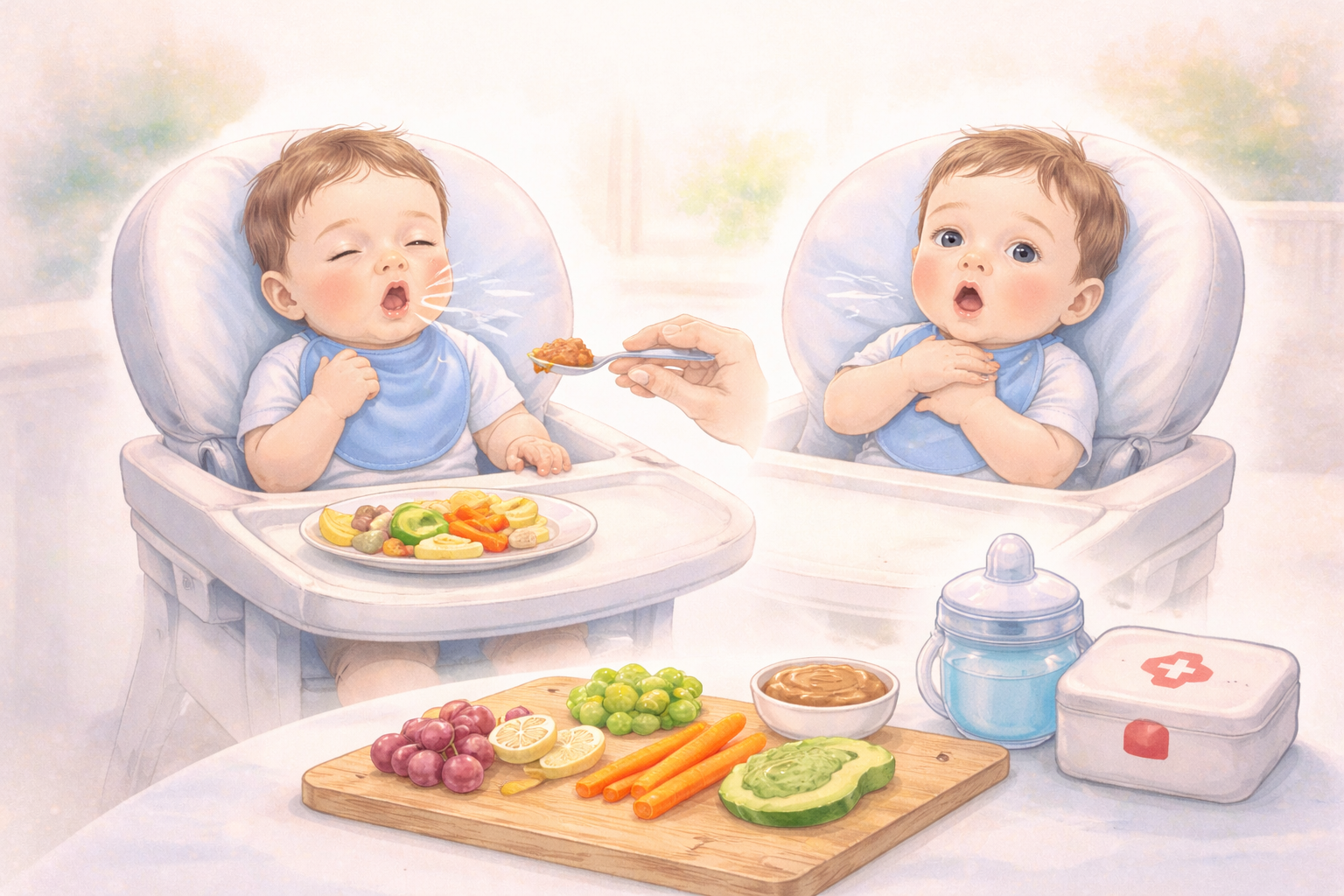

Starting Solids: Choking vs Gagging (and How to Prep Safely)
Starting solids often brings a mix of curiosity and tension. The foods are small, the reactions can be big, and it’s not always obvious what you’re seeing in the moment.
When a baby gags for the first time, many parents freeze because they care deeply and want to respond well.
Knowing how gagging works, how choking looks, and how to prepare thoughtfully can make this stage feel steadier and far less dramatic than it sometimes appears.
How gagging works in early eating
Gagging is a built-in safety reflex. Early on, it’s positioned closer to the front of a baby’s mouth and responds quickly to new textures.
As babies gain experience, this reflex gradually shifts backward and becomes less reactive. Until then, gagging can look intense—even when everything is going exactly as it should.
- Coughing or retching
- Loud, sputtering sounds
- Watery eyes
- A startled expression followed by recovery
These signs mean air is still moving. The reflex is active. Learning is happening.
(Often right around the time your shoulders finally stop living up near your ears.)
How choking presents differently
Choking is different and it requires immediate action.
- Little or no sound
- Difficulty breathing
- Bluish or grey color changes
- Panic without effective coughing
These moments escalate quickly. Knowing the difference ahead of time helps parents stay oriented when thinking clearly matters most.
At-a-glance distinction:
Noise + recovery = gagging.
Silence + distress = choking.
Preparing for solids before the first bite
Readiness cues
Many babies are ready for solids around six months, but readiness shows up through skills rather than the calendar.
Sitting upright with support, steady head control, and genuine interest in food tend to make early feeding feel smoother—for babies and parents alike.
Seating and environment
- Upright positioning
- Stable seating
- Close supervision
- A calm, unrushed pace
Early meals work best when they feel settled. This is not the stage for multitasking.
Food preparation and early choices
How food is prepared matters as much as what’s offered.
Soft, easily squished foods are generally easier to manage early on. Some foods are commonly modified or avoided at first due to shape or texture:
- Whole grapes or cherry tomatoes
- Hot dogs or sausages
- Nuts, popcorn, hard candy
- Thick globs of nut butter
Preparation evolves as skills grow. Early meals don’t need to prove anything.
Responding calmly when gagging happens
- Stay close and attentive
- Keep baby upright
- Give the reflex a moment to work
Most babies clear food on their own. Staying calm reduces the chance of rushed reactions that interrupt the learning process.
Why preparation reduces panic:
Familiarity—not perfection—builds confidence. Over time, fewer moments feel unfamiliar.
Moving forward with confidence
Confidence with solids builds gradually. Gagging often becomes part of the learning story rather than a stopping point.
Pausing, adjusting, or slowing down are always available options. Good judgment includes flexibility and patience for yourself too.
(This article is informational and not a substitute for medical advice. Always consult your pediatrician with concerns.)