





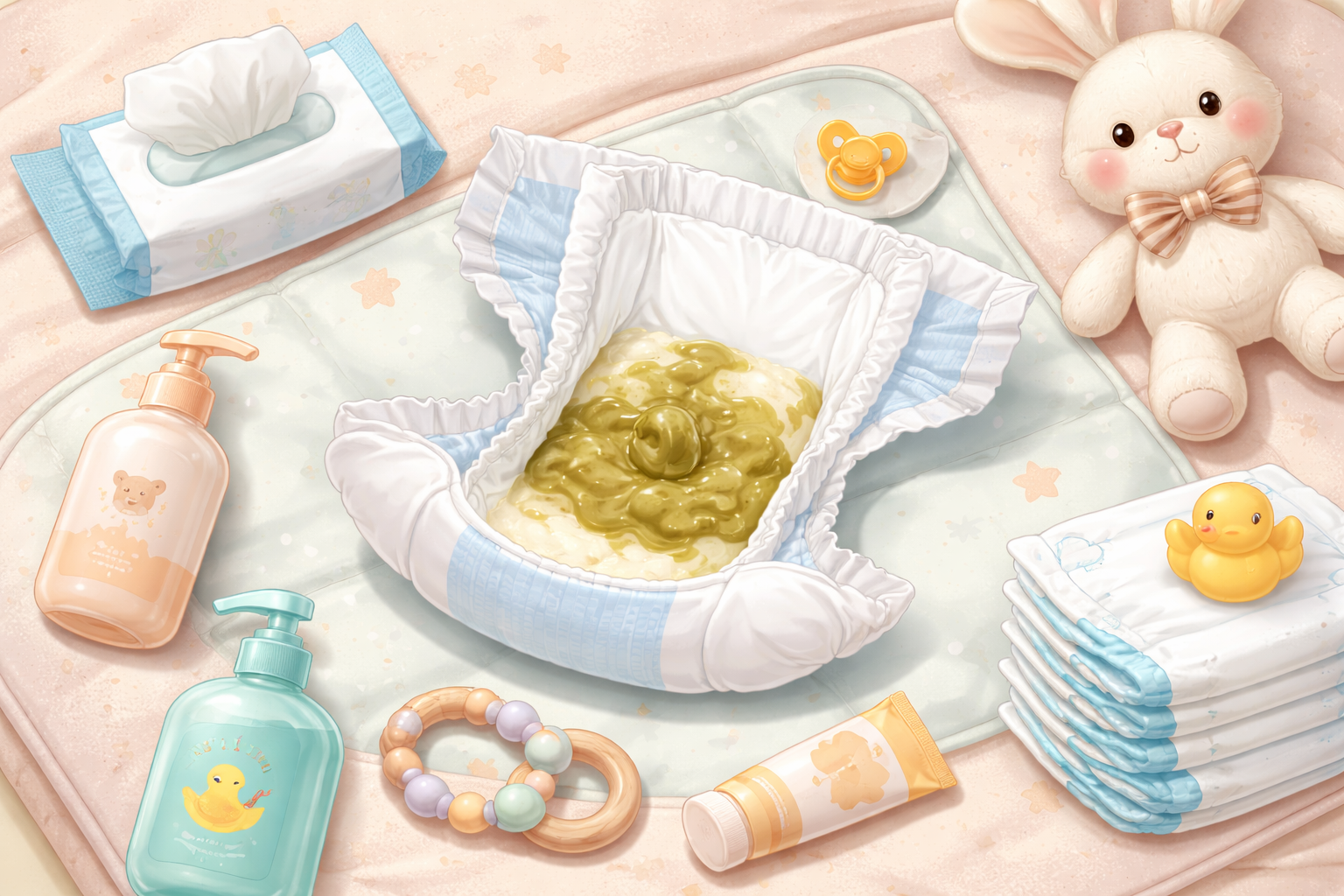

Green Poop or Mucus in Baby Stool: What It Can Mean (By Age)
Few things send parents into a search spiral faster than opening a diaper and seeing something unexpected.
Green.
Stringy.
Mucus-like.
Suddenly different.
Parents often say:
- “It looked wrong.”
- “I can’t unsee it.”
- “Google made it worse.”
Before you panic: green or mucus stool in babies is common.
The meaning depends heavily on age, feeding method, and overall behavior.
This guide walks through what green poop and mucus can signal — by stage — and when it’s worth checking in.
First: Color Alone Rarely Tells the Whole Story
Poop color changes for many reasons:
- digestion speed
- iron intake
- formula type
- solids
- mild irritation
- swallowing mucus from a cold
Color is information — not a diagnosis.
What matters more than the shade is:
- consistency
- frequency
- baby’s mood and feeding
- patterns over time
0–6 Weeks
The Newborn Digestive Learning Curve
In early newborn weeks, green stool can appear when:
- digestion is moving quickly
- baby receives more foremilk than hindmilk (breastfeeding context)
- mild stomach upset occurs
- baby swallows mucus from congestion
Breastfed newborn stools are often:
- yellow and seedy
- but can occasionally appear green and loose
Formula-fed newborn stools may:
- appear darker green
- especially with iron-fortified formula (which is normal)
Mucus in this age group is often related to:
- swallowed nasal mucus
- immature digestion
What usually reassures pediatricians:
- baby is feeding well
- gaining weight
- producing wet diapers
- not unusually irritable
At this stage, single green diapers are usually just that — single moments.
6 Weeks–4 Months
Faster Digestion + Growth Spurts
Parents often start noticing:
- bright green stools
- occasional mucus streaks
- temporary stool changes during growth spurts
Green poop in this window often connects to:
- rapid milk intake
- mild digestive sensitivity
- short-term viral exposure
Parents frequently describe:
“Everything seemed fine except the diaper.”
If baby is:
- content between feeds
- sleeping normally
- gaining weight
…isolated green stools are typically not urgent.
4–6 Months
The Distracted Feeder Phase
This stage brings:
- more alert babies
- shorter feeds
- shifting stool patterns
Green stools here often result from:
- faster feeding
- incomplete feeds
- minor gut irritation
Parents sometimes worry they caused imbalance.
Often, it’s developmental efficiency shifting digestion speed.
6–12 Months
Solids Enter the Picture
Once solids begin, stool becomes unpredictable.
Green stool at this stage can be linked to:
- green vegetables
- food dyes
- iron intake
- changes in gut bacteria
Mucus may appear when:
- baby has a cold
- teething increases drool swallowing
- mild food sensitivities are explored
Solids naturally change stool texture, smell, and rhythm.
What Mucus Can Mean
Mucus looks like:
- shiny streaks
- jelly-like strands
- slimy coating
Small amounts can occur when:
- baby has congestion
- digestion is slightly irritated
- mild viral illness passes
Larger, persistent mucus — especially with blood, ongoing diarrhea, or extreme fussiness — deserves pediatric input.
The key word is persistent.
When It’s Worth Calling Your Pediatrician
- blood in the stool
- persistent mucus over multiple days
- diarrhea combined with dehydration signs
- significant feeding refusal
- lethargy
- severe irritability
Pediatricians are used to poop photos. Truly.
You’re not overreacting by asking.
A Practical Pattern Rule
Instead of focusing on color alone, ask:
- Is my baby feeding normally?
- Are wet diapers continuing?
- Is behavior typical?
- Is this a one-off or a pattern?
If the overall picture is steady, stool color alone rarely signals urgency.
Where a Parenting Assistant Makes This Easier
Green poop and mucus questions are classic 2 a.m. searches.
Parents often ask:
- “My 3-month-old has green poop but is happy — okay to wait?”
- “We started solids and stool turned green with mucus — normal?”
- “This is the third green diaper today — should I worry?”
Because Coddle knows your baby’s age and feeding method, holds recent context, and interprets stool changes based on developmental stage, it helps you see patterns instead of reacting to single diapers.
No diagnosis but just perspective.