





Diaper Rash That Won’t Go Away: Yeast vs Irritation
(and why some rashes don’t respond the way you expect)
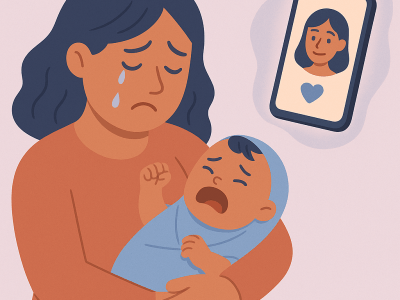
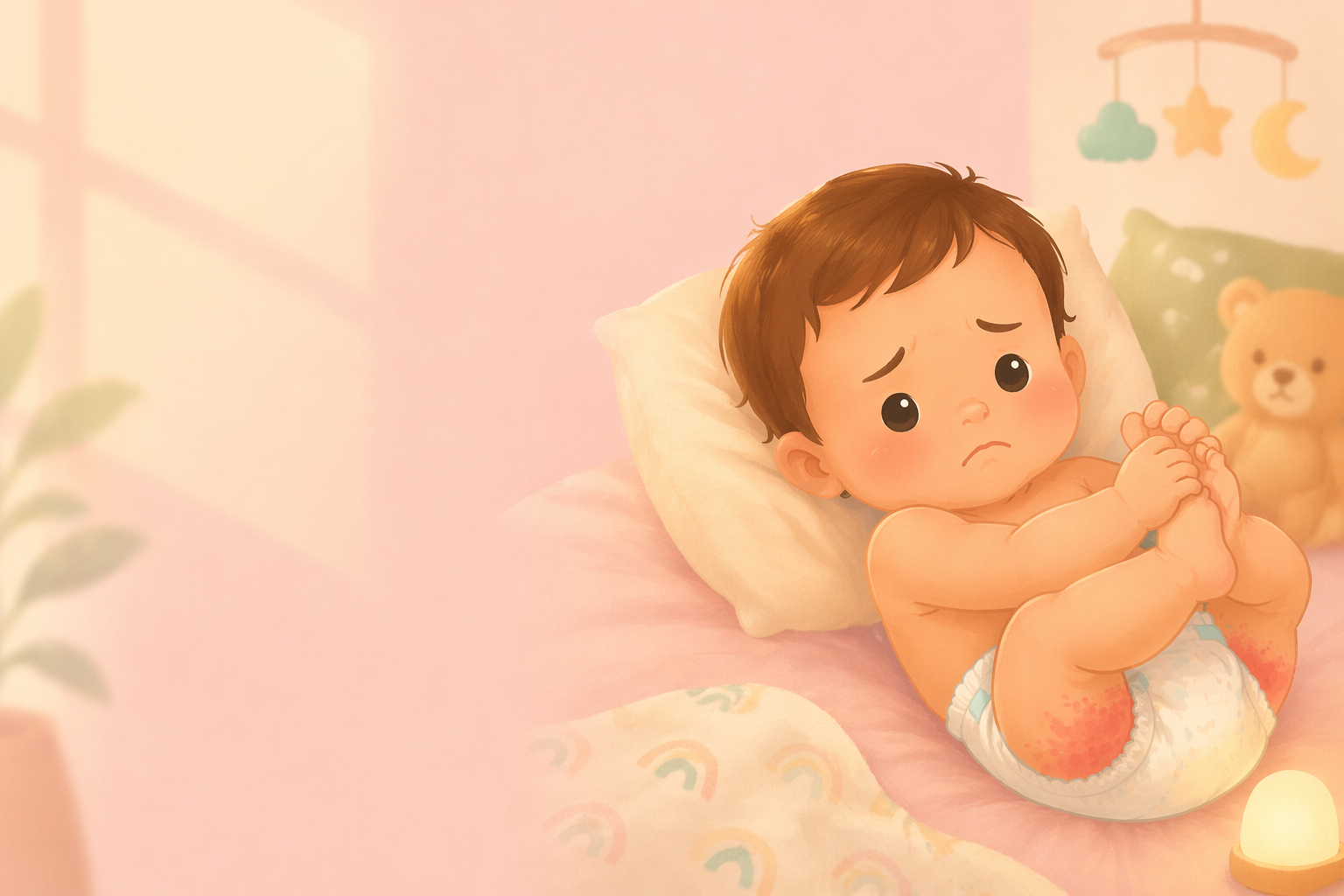
There’s a point where a diaper rash stops feeling routine.
At first, it looks manageable.
A little redness. Something you’ve seen before.
You change more often.
Use a cream. Give it some time.
Because usually, that’s enough.
But then a few days pass.
And it’s still there.
It may look the same.
Maybe slightly different.
But not clearly better.
And that’s when the question changes.
Why isn’t this improving?
When it starts to feel unclear
When a rash doesn’t improve the way you expect, the questions tend to build.
Not all at once.
But quietly, in the background.
- Why isn’t this getting better?
- Should I try a different cream?
- Is this just irritation, or something else?
- How do I know if it’s yeast?
- Am I making it worse by trying too many things?
- How long to wait?
It can start to feel like you’re guessing your way through it.
And that’s usually the hardest part.
Not the rash itself, but not knowing how to read what you’re seeing.
If you’ve felt this kind of uncertainty with other baby changes too, you might find this helpful:
“Why Babies Change Every Day (and Why It’s Completely Normal)”
Why some rashes don’t improve
Most diaper rashes are caused by irritation.
They respond to simple care and improve within a few days.
When that doesn’t happen, it’s often because the rash isn’t the same type.
Two common possibilities:
- irritation from moisture and friction
- a yeast-related rash that needs a different approach
They can look similar early on, but behave differently over time.
A small reset
If you’ve already tried a few things and it’s not improving, it can feel like nothing is working.
But often, it’s not about doing more.
It’s about recognizing that the rash may need a different kind of care.
That shift is small, but it changes what you do next.
A quick way to tell the difference
Sometimes the easiest way to understand it is to see the differences side by side
Where context changes everything
Diaper rash rarely feels clear in the moment.
A parent might ask:
“Why is my baby slightly red after just a pee diaper?” or
“Why does the rash always look worse after a mixed diaper?” or
“It seems fine during the day, but gets bad at night. Is that normal?”
Individually, each moment feels small. But together, they start to form a pattern.
That is what diaper tracking in Coddle helps with.
Instead of guessing, parents log what happened, pee, poop, or mixed diaper, and how the rash looked at that time. Over a few days, it becomes easier to notice what is actually triggering it.
Maybe pee-only diapers do not change much, but mixed diapers consistently cause flare-ups. Or maybe the rash may worsen during longer gaps at night.
And suddenly, it is no longer just a rash. It is a pattern you can understand.
This same idea shows up in other areas, too, especially sleep and feeding patterns:
Night Feeds: When Babies Usually Drop Them (and What’s Normal)
How to treat diaper rash based on what you notice
Once patterns are clearer, treatment becomes more targeted.
If rash seems worse after poop or mixed diapers, it usually helps to:
- Change diapers more quickly after bowel movements
- Gently clean and make sure the skin is fully dry
- Use a barrier cream to protect the skin from further irritation
If it mainly shows up with long gaps (like overnight):
- Try more frequent diaper changes before long sleep stretches
- Use extra protection at night (like a thicker barrier cream)
- Make sure the diaper isn’t staying wet for too long
If it stays mild with pee-only diapers but flares occasionally, it’s often due to simple moisture or friction: keeping the area dry and using a protective cream is usually enough.
The goal isn’t to “guess a cure,” but to respond to what the pattern is showing.
Once you know what’s triggering it, treatment becomes much simpler and faster.
What if it is yeast
If the rash is not improving and starts to look like a yeast rash, it usually just means the skin needs a slightly different kind of care.
Regular diaper creams can still help protect the skin, but they may not be enough on their own.
This is often a good time to check in with your pediatrician to find out what the skin might need next.
In the meantime, gentle care can still support the skin:
- keeping the area as dry as you can
- changing diapers a bit more frequently
- being gentle while cleaning
- giving the skin a little time without a diaper, when it’s possible
When the care matches what the skin needs, things usually start to ease.
READ MORE
If you’re noticing other small changes in your baby’s skin, this might also help:
Trusted Source:
American Academy of Pediatrics (healthychildren.org)
NIH → Infant Dermatology Basics
Centres for Disease Control and Prevention →hygiene, infection prevention, infant care basics
(This article is informational and not a substitute for medical advice.)