






It’s 2 a.m.
Your baby does something new—or unfamiliar—or just slightly off. You reach for your phone, heart racing, and type a question you’ve already asked ten different ways.
Somehow, the answers make things worse.
Late-night parenting questions aren’t really about information.
They’re about uncertainty, exhaustion, and the fear of missing something important.
What helps most in these moments isn’t finding the perfect answer. It’s learning how to ask a question that brings clarity instead of escalation.
When this happens, parents usually have three options:
wait and worry, spiral through search results, or ask someone who already knows their baby’s age and context.
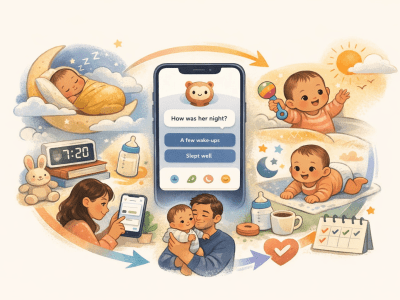
For many families, that’s where Coddle becomes the first stop, not because it replaces a doctor, but because it’s available in the moment, when questions can’t wait for the next appointment.
Why 2 a.m. Questions Feel Heavier Than Daytime Ones
At night, decision-making happens under very specific conditions:
- Sleep deprivation
- Reduced emotional buffer
- Fewer reference points from the day
- A quiet that amplifies worry
Parents often notice that the same question asked at noon feels manageable—while at night, it feels urgent.
The difference usually isn’t the baby. It’s the mental load.
The Question Beneath the Question
What parents often type at 2 a.m.:
- “Is this normal?”
- “Should I be worried?”
- “Did I miss something?”
What they’re usually trying to figure out:
- Did something change?
- Does this fit with the rest of the day?
- Do I need to act now—or can this wait?
Surfacing that underlying question is often the first step toward calm.
How to Frame Late-Night Questions So They Reduce Panic
Questions that help at night tend to share three traits. They’re anchored in time, context, and impact.
- What changed, and when?
- Is this affecting feeding, sleep, or comfort?
- Has this been increasing—or staying about the same?
- What’s the worst thing this could be?
- Is this always a sign of something serious?
- Why is my baby doing this?
Why Holding Context Is Hardest at Night
Late-night spirals often happen because parents are trying to:
- Remember their baby’s exact age and stage
- Recall what happened earlier in the day
- Decide whether something is new or familiar
All while exhausted.
This isn’t a lack of intuition. It’s cognitive overload.
Support that holds context—age, routines, recent changes—can make it easier to ask grounded questions without rebuilding the entire picture from scratch.
Turning Answers Into One Reasonable Next Step
The goal of a 2 a.m. question isn’t certainty. It’s deciding one reasonable next step.
Most helpful answers lead to one of three outcomes:
- Watch and see
- Make a note to ask later
- Reach out now
That’s triage—not diagnosis.
Organizing what changed, what stayed the same, and how your baby seems between moments often reduces anxiety on its own.
For a deeper framework on deciding when to wait versus when to check in,
read: A Calm Guide for New Parents.
Letting Something Else Carry the Mental Load
At 2 a.m., the hardest part is holding context.
Parents often know what they want to ask, but not how to phrase it — or whether it’s worth asking at all. Waiting for the next pediatrician visit can feel too long, and searching online often escalates worry instead of resolving it.
This is where many parents turn to Coddle. Because the assistant already knows their baby’s age, feeding stage, and recent patterns (when logged), parents can ask real questions like:
“My baby fed well all day, but tonight is fussier and sneezing more. No fever. Is this something to watch or ask about?”
Many parents find it helpful to have support where:
- The baby’s age and stage are already known
- Context doesn’t need to be re-explained
- Guidance is grounded in pediatric standards
- Escalation is discouraged unless warranted
Asking: “This happened tonight, nothing else changed—what usually matters here?” can feel very different from searching alone.
Tools that support this kind of questioning don’t replace medical care. They help parents feel steadier between decisions—especially when the brain is tired.
A Small Shift That Changes Everything
Many parents notice relief when they stop asking questions about their baby and start asking questions with their baby’s context in mind.
That shift often turns panic into perspective.
If you’re navigating the early weeks and want more age-specific clarity—especially at night—
read: Newborn Care by Age: A Gentle Week-by-Week Guide (0–12 Weeks).
(This article is informational and not a substitute for medical advice. Always consult your pediatrician with concerns.)