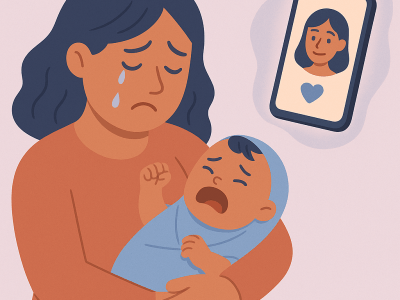





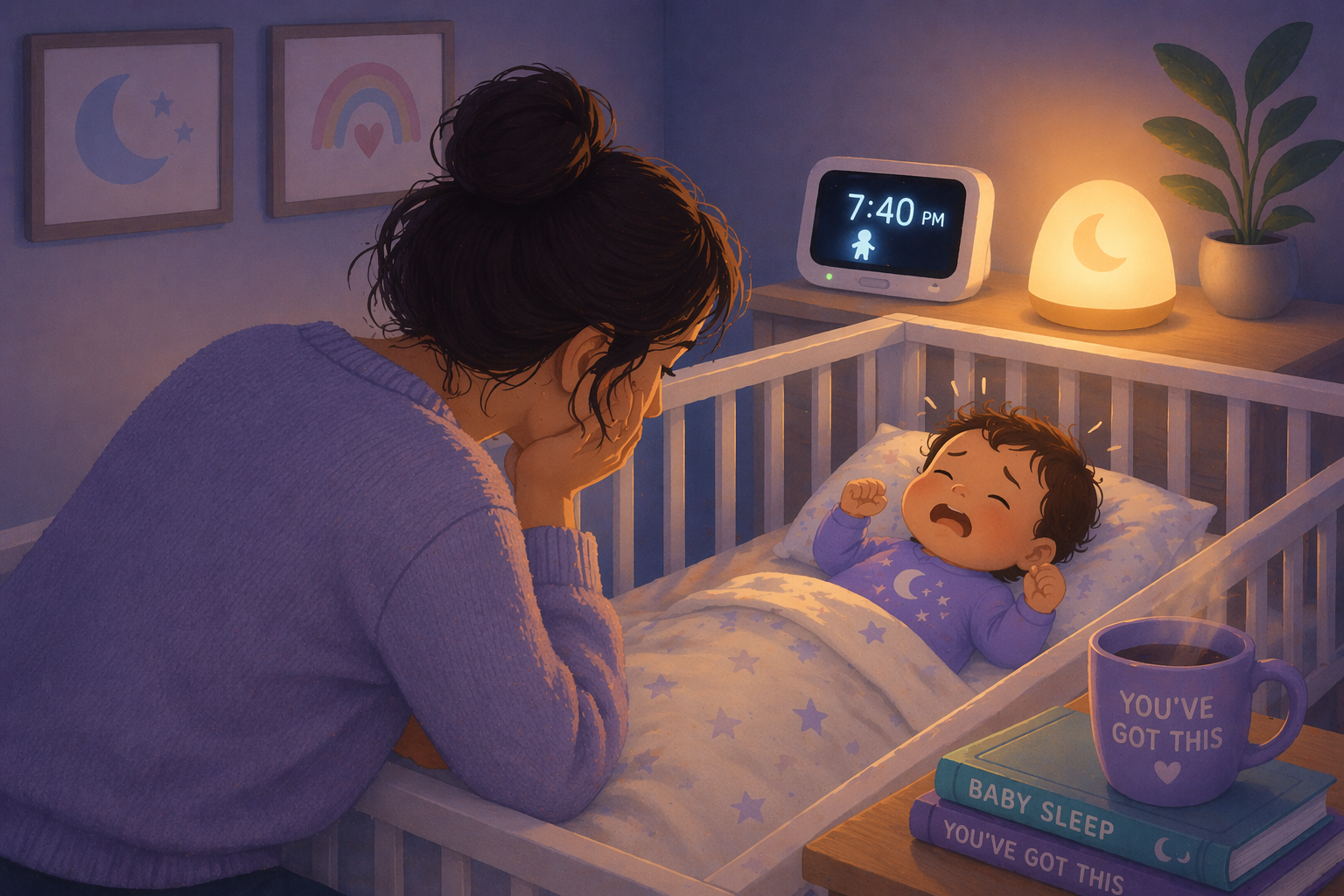

Baby Wakes After 30-45 Minutes? Understanding False Starts at Bedtime
(And why bedtime doesn’t always stick right away)
You put your baby down for the night, and it seems to go as expected.
They settle.
They fall asleep.
The evening begins to quiet down around you.
For a brief moment, it feels like bedtime has worked.
And then, not long after, something changes.
A sound on the monitor.
A shift in movement.
A cry that brings you right back.
It hasn’t been hours.
Just one short stretch of sleep, often 30 to 45 minutes.
Long enough to feel like the night started, but not long enough to understand why it didn’t continue.
And the questions start to form, almost immediately.
“Did I put my baby down too early?”
“Are they overtired?”
“Do I need to change bedtime?”
What a “false start” actually is
A false start is when a baby wakes soon after falling asleep for the night, usually within the first sleep cycle, around 30 to 45 minutes.
It can feel like bedtime worked at first.
But instead of continuing into a longer stretch, sleep breaks early. It is not quite a night waking, and not quite a nap. Just a brief start to the night that does not fully settle.
Why does it become confusing so quickly
False starts often follow the same pattern on the surface.
Your baby falls asleep.
You step away.
They wake again within a short window.
Because it looks the same each time, it feels like there should be one clear explanation.
But the same pattern can come from different reasons.
One evening, it resolves quickly.
Another evening, it takes longer to settle.
Some nights, it does not happen at all
That is where the doubt builds.
“Why is this happening at the same time every night?”
“Why did yesterday go smoothly, but not today?”
What is usually happening underneath
Most false starts occur at the start of the night, as you transition from light to deeper sleep. This transition is not always smooth, especially in the first year.
A few factors can influence how easily your baby moves through it.
Too much wake time before bed
When the last stretch of the day runs long, the body can become more alert, which often leads to short or restless early sleep.
Not enough wake time before bed
If your baby is not fully ready for night sleep, they may fall asleep but not stay asleep.
Early sleep cycles are lighter
The first part of the night is not always deep sleep. Babies are more likely to wake fully during this phase.
Falling asleep with support
If your baby falls asleep while feeding or being held, they may look for the same conditions when their sleep cycle shifts.
Normal developmental changes
Sleep can temporarily become unsettled as your baby grows.
On paper, these explanations sound clear. But in the moment, it does not feel clear at all.
You are not seeing categories. You are seeing the same wake-up, again and again.
If you want to understand how baby sleep cycles actually work.
1. Baby Sleep Cycles / Baby Patterns That Actually Matter
2. Early morning wake-ups
The point where it starts to feel like a problem
It usually begins with one night.
Then it happens again.
Now it feels like a pattern.
So you try to adjust something.
An earlier or later bedtime.
A longer nap or a shorter one.
Maybe you can change how your baby falls asleep.
Each change makes sense.
But after a few days, it can feel like everything is being adjusted at once.
That is when the questions get heavier.
“Am I making this worse by changing things?”
“Should I just stick to one approach?”
Read More
What often gets missed in the moment
A single evening does not give enough information.
Even a few nights in a row can still feel unclear.
What matters is what happens over several days, such as
Is the wake-up happening at the same time?
Does it follow certain types of days?
Is your baby settling quickly, or staying awake longer?
This is where the bigger question usually appears.
Without that context, it is easy to treat each night as a new problem.
What becomes clearer with time
False starts can feel urgent at first.
But many parents notice that they change on their own.
Some babies grow out of them as sleep matures.
Some patterns become predictable.
Some nights improve without any clear reason.
What changes is not just the sleep.
It is how clearly you can see what is repeating.
Where more clarity actually helps
At some point, the question changes.
From: “Why did this happen tonight?”
To: “Is this normal for my baby?”
That is a different kind of question.
It is not about solving in one evening.
It is about understanding a pattern.
This is why Coddle is practically designed for.
Coddle does not just log sleep. It looks at your baby’s age and recent patterns together.
So instead of trying to piece things together mentally, you can ask:
“My baby wakes 40 minutes after bedtime most nights.”
“This just started a few days ago. Is it a phase?”
Because Coddle already knows your baby’s age and tracks patterns over time, it can:
- Identify if these lines up with common developmental changes
- Notice if timing points to overtiredness or undertiredness
- Show whether the pattern is consistent or still forming
That context changes how decisions feel.
Instead of adjusting everything after one night, you can see what is actually repeating and what is not.
What helps without overcorrecting
False starts rarely need a complete reset.
Small, steady adjustments are usually more effective and can help parents feel more confident in managing sleep without feeling overwhelmed.
You might try:
- keeping bedtime within a consistent range
- avoiding large shifts in naps from day to day
- giving changes a few days before adjusting again
- responding calmly and consistently when your baby wakes
“Do I need to fix this tonight?”
In most cases, NO.
The goal is not to eliminate every wake-up.
It is to support smoother transitions over time.
When to check in with your pediatrician
False starts are usually related to sleep patterns and development.
But it is worth checking in if you notice:
- feeding difficulties or reduced intake
- unusual lethargy during the day
- persistent crying that feels different from typical fussiness
- signs of illness such as fever or discomfort
If something feels different beyond sleep timing, it is always okay to ask.