





Sleep and Illness: What to Expect and How to Reset Routines After
It usually shows up after things seem to be back to normal.
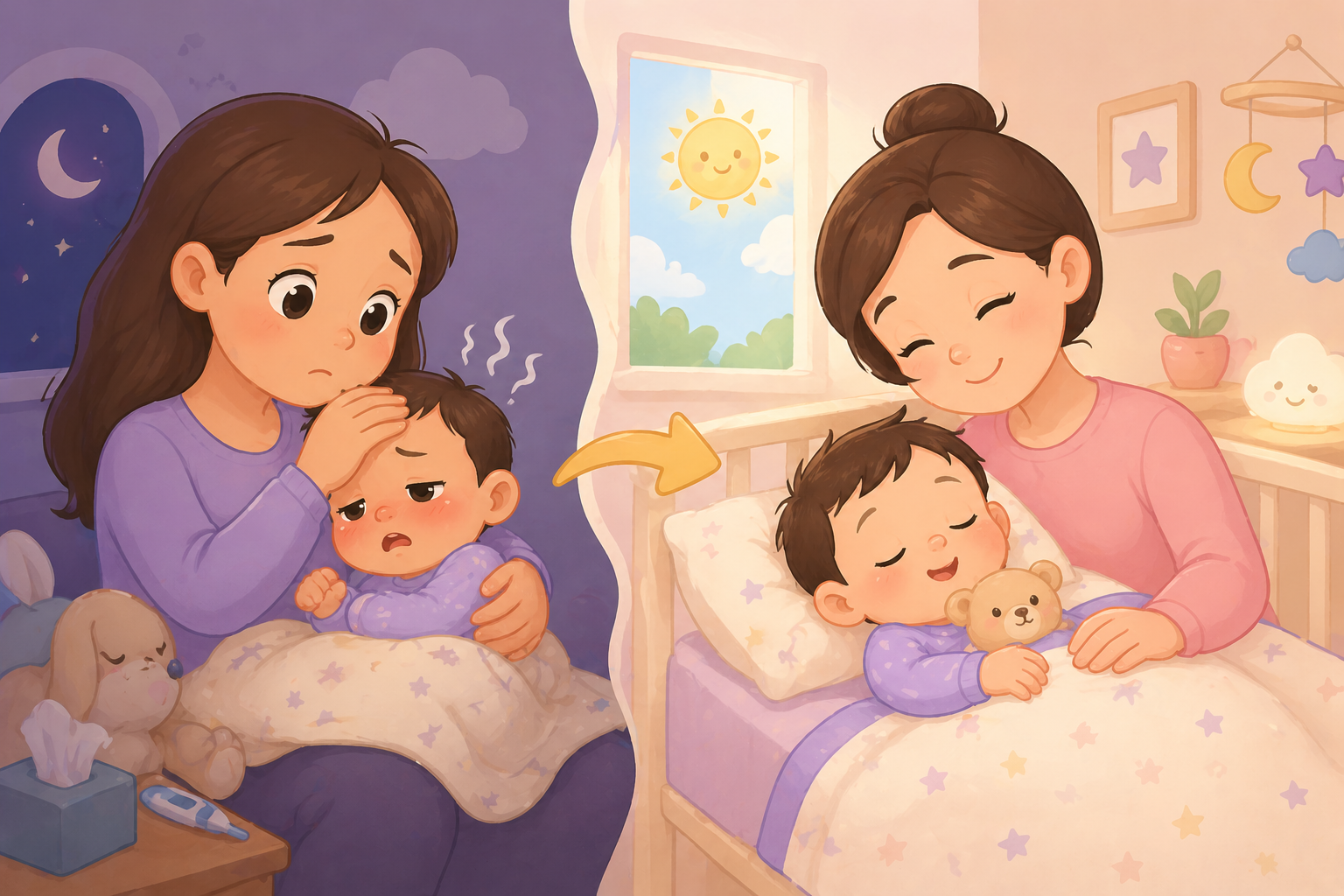
Your baby had a cold or a fever. A few rough nights passed. Then suddenly, they feel better again.
But sleep does not fully return with them.
That is the part that catches most parents off guard.
Because the illness is gone, but the nights still feel unsettled.
What actually changes during illness
When a baby is sick, sleep becomes unpredictable.
Not in dramatic ways at first, but quietly:
- They wake more often than usual
- They need more help to fall asleep
- Naps become shorter or uneven
- Nights feel lighter and more fragmented
In those days, sleep was less about routine and more about comfort and recovery.
Why does sleep not reset immediately?
Even after recovery, babies do not return to their old patterns immediately.
A few things are still catching up:
- The body is still recovering energy
- Sleep cues changed during illness days
- New habits formed around comfort and feeding
- Baby loosely held the timing and rhythm for a while
So even when health returns, sleep needs time to reorganize.
In the in-between phase, what do parents notice?
This is the part that feels confusing in real life.
Your baby looks fine during the day, but at night, it feels different.
You may notice:
- Longer time to settle at bedtime
- More waking than expected
- Extra need for comfort or feeding
- Nap patterns that feel unpredictable
It is not a step backwards. It is a transition out of “sick-mode sleep.”
How to guide sleep back gently
Instead of trying to “fix” sleep, think of it as reintroducing rhythm.
- Keep bedtime and wake time steady
- Repeat the same calm sleep steps each night
- Slowly reduce the extra help used during illness
- Make daytime naps consistent again, where possible
The goal is familiarity, not pressure.
When things usually settle
For most babies, sleep does not snap back overnight.
It slowly stabilizes over time as:
- Comfort needs reduce
- Old sleep associations fade
- Routine becomes predictable again
Some babies adjust in a few days, others take a couple of weeks.
Both are normal.
What this phase really means
This is not a sleep-getting-worse mode.
It is sleep finding its way back after being interrupted.
And once routines feel familiar again, most babies return to their usual patterns naturally, without needing major changes.
Find this useful:
1. Understanding Infant Sleep: Baby Sleep Patterns and Healthy Sleep Habits.
2. Early Morning Wake-Ups: Causes + Resets
How Coddle helps during sleep changes after illness
When sleep becomes unpredictable after your baby recovers, it can be hard to tell what is normal and what is not. Every night can feel slightly different, which makes it easy to second-guess everything.
Coddle helps by connecting those changes to context, not panic.
Instead of treating each night separately, it looks at patterns across:
- Recent illness and recovery stage
- Age-appropriate sleep expectations
- Changes in settling, naps, and night waking
- Comfort and feeding patterns
So instead of asking: “Why is sleep worse again tonight?”
You start seeing: “This is part of post-illness adjustment, not a new problem.”
It gently moves you from reacting to each disruption to understanding the overall phase your baby is in.
When to check with a doctor
Most sleep changes after illness are temporary and improve gradually. But it is important to look at your baby’s overall health, not just sleep alone.
You should consider speaking to a pediatrician if:
- Your baby is still unwell, or symptoms return after improvement
- Feeding has not returned to normal
- There is persistent fever, unusual tiredness, or low activity
- Sleep disruption continues for a long time without any improvement
- You feel something is clearly different from your baby’s usual behavior
Trusted Sources:
American Academy of Pediatrics → HealthyChildren.org
Centers for Disease Control and Prevention → Infant safe sleep practices and risk reduction
(This article is informational and not a substitute for medical advice.)